
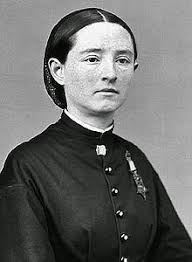
Frances Elizabeth Quinn: The Irish Girl Who Became a Union Soldier—Five Times


We all know the stories of many of the brave men who fought in the Civil War. We may even be familiar with stories of brave women who served during the war as nurses, but most of us, I would bet, aren’t familiar with a story of the story of the women who also fought. Few stories were as bold, persistent, or downright cinematic as that of Frances Elizabeth Quinn, an Irish immigrant who disguised herself as a man and enlisted in the Union Army at least five separate times. Her determination, grief, and grit made her one of the most compelling female soldiers of the era.

🇮🇪 From Ireland to Illinois: A Childhood Marked by Loss

Frances was born in Ireland and brought to the United States as a small child. Her family settled in La Moille, Illinois. Tragedy struck early—both of her parents died soon after arriving, she and her brother Thomas were separated and raised by different families, a painful fracture that shaped her future (https://en.wikipedia.org/wiki/Frances_Elizabeth_Quinn).

When Thomas ran away at fourteen to join the 52nd Illinois Infantry, Frances—only sixteen—refused to be left behind again.

🪖 A Soldier in Disguise

Frances cut her hair, donned men’s clothing, and enlisted under the name B. Frank Miller. This would be the first of many aliases.

Her enlistments included:

  • Indiana three‑month infantry unit (as B. Frank Miller)
  • 2nd Tennessee Volunteer Cavalry
  • 90th Illinois Infantry (“Irish Legion”)—twice
  • A cavalry division as a teamster
  • Later service under the name Frank Martin as an orderly to General Jeremiah Boyle(Wikipedia)(https://www.researchonline.net/ilcw/unit111.htm)

Each time she was discovered to be a woman, she was discharged—only to enlist again.

⚔️ Battlefield Service and Injury

Frances is said to have been injured twice during her service having fought in both the infantry and the calvary. She was wounded during the Battle of Stones River on December 31, 1862. There she was shot in the shoulder, and her sex was discovered yet again. Later she was wounded in the leg during an attempt to escape. (Wikipedia)

Her resilience was astonishing. Even after injury, humiliation, and repeated dismissals, she kept returning to the fight.

💔 A Sister’s Grief Becomes a Soldier’s Resolve

In April 1863, Frances learned that her beloved brother Thomas had been killed at Shiloh.
This loss devastated her—but it also fueled her determination to rejoin the Union cause.

Under the name Frank Martin, she became an orderly and scout, impressing officers with her courage and effectiveness. She even helped bring Confederate prisoners into Union lines (Wikipedia).

🎭 A Life of Aliases and Reinvention

Frances used multiple identities throughout the war:

Her ability to reinvent herself was both a survival strategy and a testament to her fierce independence.

🌟 Why Her Story Matters

Frances Elizabeth Quinn represents:

  • Women who defied gender norms long before they had legal rights to do so
  • Irish immigrant contributions to the Union cause
  • The emotional power of family bonds in wartime
  • The hidden history of female soldiers, many of whom remain unnamed

Her story is a reminder that the Civil War was not fought only by the men whose names fill the textbooks—but also by determined, courageous women who refused to stay on the sidelines.

This is the first of several posts I plan to write about females in battle.

Have a great week!


The Importance of Uncovering Family History

We know that each person’s life is a book which has meaning and relevance to the story of mankind, even if we feel insignificant. When someone dies that story ends and the book is closed. The same can be said of our families. Every family carries a story — a tapestry woven from the lives, choices, triumphs, and hardships of those who came before us. Yet in the busyness of everyday life, it’s easy to move forward without looking back. Taking the time to explore your family’s history is more than a nostalgic hobby. It’s a meaningful act of grounding, understanding, and connection.

1. It Helps You Understand Who You Are
Your identity is shaped not just by your own experiences, but by the generations before you. Learning about the paths your ancestors walked — whether they crossed oceans, built new communities, or persevered through personal challenges — can give you a deeper sense of place in the world. Family narratives, like those preserved in historical memoirs and genealogical research collections such as Family History & Stories, remind us that we’re part of a much bigger story. [Family His…& Stories | PDF]

2. It Preserves Stories Before They Fade
Every family has stories that risk being lost with time — memories held by grandparents, handwritten letters tucked away in drawers, or names on old family‑tree charts like those found in historyfiles. Documenting these stories ensures they remain accessible for future generations. Without our effort to safeguard them, rich histories may disappear. [onedrive.live.com]

3. It Strengthens Family Bonds
Researching family history often becomes a shared journey. Interviews, photos, and documents open the door to conversations with relatives you may not know well. Even old family anecdotes — like the multigenerational stories captured in files such as history reference — help bridge gaps between ages and bring families closer together. [history reference | HTML]

4. It Provides Perspective and Resilience
Learning about hardships or resilience in your family line can offer strength during your own challenges. When you discover what earlier generations endured or accomplished, your own struggles can feel more manageable. Their perseverance becomes a quiet encouragement: you come from strength.

5. It Preserves Cultural and Regional Roots
Family histories often hold clues about cultural heritage, migration, and traditions. Whether your roots trace through states like Georgia or North Carolina — as seen in historical accounts preserved in materials such as history reference — understanding where your lineage comes from can deepen your appreciation for the customs and values passed down to you. [history reference | HTML]

6. It Creates a Legacy for the Future
By learning and recording your family’s past, you’re creating a gift for future generations. One day, someone in your family may rely on the notes, photos, and stories you preserved — just as you may rely on the work of earlier relatives who safeguarded records like those represented in Family History & Stories. [Family His…& Stories | PDF]

I write stories like Finding Faith and Send Me A Song because of my belief in discovering one’s family history and of the importance of sharing our family stories. These help us to feel more grounded and to help us understand where it is we come from and why we are the way we are. I believe that our hearts and souls long to know that history. This why adoptees like myself don’t feel whole until we can discover our birth families. I believe we have a right we have to know and understand where we came from. So often, not knowing can be damaging and can lead people to strike out under the frustration of not understanding who we truly are.

Studies have shown that adoptees and foster children are twice as likely as suffer from depression, anxiety, and other mental heal health issues as blood related children are. Key findings regarding mental health in adopted and foster children include:

Contextual Factors: Risk varies based on adoption type, with children placed in foster care or adopted later in life facing higher risks than those adopted at birth. (National Institutes of Health (NIH) )

Higher Prevalence: Adopted children are nearly twice as likely to suffer from mood disorders like anxiety and depression.

Foster Care Risk: Former foster children are significantly more likely (over 2x) to develop clinical depression, and are also prone to PTSD, attachment issues, and behavioral problems.

Common Issues: Common diagnoses include Reactive Attachment Disorder (RAD), Oppositional Defiant Disorder (ODD), and PTSD, often stemming from early life trauma.

Core Issues: Many adoptees struggle with issues related to loss, rejection, identity, and grief, which can increase the likelihood of internalizing or externalizing emotional stress.

Knowing your family’s history is more than collecting dates and names. It’s about honoring the lives that shaped yours, preserving wisdom that might otherwise be lost, and fostering deeper ties between generations. Your story didn’t begin with you — and exploring the roots of your family tree can be one of the most meaningful journeys you take.

Remember, too, that it cannot stop with YOU! You must take your family’s history forward for those who will come after you. Start a journal or scrapbook or make a video and fill it full of all the important information about your family so that your grandchildren, great-grandchildren and on will know who you were, what was important to you, and the about world you live in and keep it safe. Make sure that your children understand and respect the importance of keeping this information and adding to it as they grow up and become parents themselves. They will be glad that you instilled this in them when they are themselves parents and grandparents.

Website Built with WordPress.com.

Up ↑