In the United States today, there are approximately 400,000 children in the foster care system. The average age of a foster child is eight years old. More than half are under the age of ten, and 27% are teens. The system which relies heavily on volunteer families is often misunderstood and suffers from a bad reputation. As of 2023, there were fewer than 200,000 licensed foster homes in the US, a decline from over 220,000 in 2019, with the number continuing to drop each year. As someone who has firsthand knowledge of the system, having lived in foster care for the first 5 years and four months of my life, I can attest to the pros and cons of the system. I can also attest to my experience with some of the children who aged out of the system when I was teaching at my local university. It was the first time I had encountered anyone in that situation, and I made it my goal to mentor these young ladies.
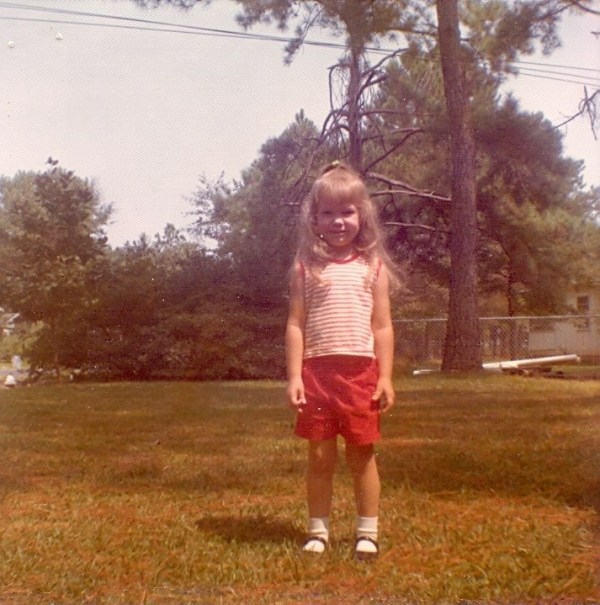
The system, obviously, was quite different when I was in foster care. I was in the system in the late 60s and early 70s. That system was secretive and was not geared for the benefit of the child. At no time did I ever feel loved, acknowledged in my feelings, or did I understand my situation. I was treated more as a commodity than a child. In those five years and four months, I was in four homes. The last home was my longest and the one that I still somewhat recall. I cannot see faces anymore, but I can recall certain situations. Some I wish I didn’t.
There were two foster children in this home. My younger foster brother, Wesley, had some issues with his legs and wore braces. I recall going with him when his braces had to be adjusted, or he had to get new shoes. I believe he was born with curved legs and that they were being straightened out. Believe me, the braces did not slow him down any and it did not keep him from doing the things he wanted to do. Then there were three natural children—a son and two daughters. I will tell you that Wesley and I did not understand that we were not their children or that he and I were not brother and sister. DFACS did a terrible job of explaining these situations to us, if they ever tried. I don’t recall ever being told that we were not actual siblings.
Our clothes and toys (although we only had 1 or 2) came from Goodwill. We never had anything new. We had never been taken out of the home to a store to go shopping for toys or food. We were always at home, except to go to the doctor or once to go on a trip. When our adoption came, the day before we were made to pack up our things. When we asked to take a book, we were told that we could not because those things did not belong to us. We both went to our new families with the clothes on our backs and nothing else. Today, foster children are fortunate enough to have suitcases to take their belongings with them and to have foster parents who don’t confiscate their belongings at the door.
We also ate differently than the rest of the family. We were always fed at different times from everyone else. I suppose that, perhaps, they had food stamps for us and only those foods were fed to us. I recall a breakfast one morning. We had oatmeal and a small cup of Kool-Aid. Mine was cherry. Wesley accidentally knocked my Kool-Aid over into my oatmeal. I was forced to eat it anyway. There were no treats except for birthdays. We did get our favorite cake, but we had no friends and there were no parties. There was no Christmas for us. No presents. No Santa Claus.I knew nothing of these until I was adopted. You wouldn’t have known any of this if you listened to DFACs, though. According to them and their “Non-identifying Information Sheet of Lies”, I had lots of toys, and I loved to go grocery shopping. If I did, why did I weigh 31 pounds as a 5-year old?
Today, I doubt foster families would get away with this. A 5-year-old would be in kindergarten and, if the child weighed 31 pounds, someone would be answering a ton of questions as to why. However, an issue that continues from my time until now is that trauma, no matter when and how experienced, separation from birth parents, inadequacies of health care often lead to behavioral, mental, and physical health issues. In the late 1960s, some states began to pay subsidies for hard-to-place children who had these types of issues. Today, parents of children adopted or fostered with ADHD, OCD, GAD, and other mental health disorders receive monthly stipends to offset the costs of treating these disorders.
It is estimated that anywhere from 30 to 80% of foster youth have at least one chronic medical condition, and roughly 25% have three or more chronic illnesses. Obviously, these children deserve foster parents who are able and willing to provide, not only the time needed to obtain the treatment these children require, but the emotional support and the true care and concern as well. Caring for a child with a terminal illness requires an even more special type of foster situation. For these children, their chronic conditions are not only more likely to be pervasive than among their peers but also more likely to cause serious health consequences. According to ChildrensRights.com, 77% of foster children experience more eating disorders than their peers. Bulimia occurs seven times more often among foster children than it does among the general population, and it tends to require intervention more often. (https://www.childrensrights.org/news-voices/for-children-in-foster-care-chronic-illness-takes-a-heavy-toll)
My experience when I was in care was that we were only taken to the doctor for our shots once a year. I only recall going to the doctor one other time and that was for a horrific headache, which I did not realize at the time was a migraine. I was not a particularly healthy child so it is surprising that I would not have needed to go to the doctor more often, but I know that I only went once a year. Wesley went to change his braces and to get new shoes and to get his shots. They had to do those things because he was growing. DFACS would know if the braces or shoes were too small, and they would get into trouble. They did as little for us as they could get away with. Interestingly, in Alabama where I lived, foster parents were paid $30 per month for standard foster care in 1973 (the year we were adopted). So that means that our foster parents made $60.00 for us. Today, they are paid $543; thus, they would make $1086 today for two children of similar age. That is a 27.6% increase which is quite small for the time period. That’s 52 years. You’d think they would’ve given a bigger increase given inflation over that length of time.
When we talk about mental health and trauma, we must talk about trauma that comes from anywhere. It could come from the home with the biological family that caused the separation and placement into the system, it could be abuse in the foster home, it could be simply the separation itself. Even a child placed at birth and who grows up in foster care like me will experience the trauma of separation. Ignoring this or belittling this fact only hurts the child more. Every adoptee experiences trauma, even those who are adopted at birth. No matter when a person realizes that their biological parent is not the parent who has raised them, it is going to create an identity crisis, and this crisis is traumatic. Working through the trauma takes time and therapy for everyone. How each goes about it will be different, but each will have to do it. Failing to seek healing through therapy or blocking the trauma can have dramatic results, if not deadly. “McCauley Evans describes three reasons for the disproportionately high percentage of adoptee suicides: 1) Adoption—or more precisely the separation from one’s mother—is a trauma. 2) Adoptees lack a complete, accurate, and up-to-date medical history, which may include depression or even suicide. 3) Adoptees don’t want to upset their adoptive parents with concerns about depression or anything that could be seen as ingratitude, including normal, healthy curiosity about their roots” (Riben, M. (2015). Toward Preventing Adoption-Related Suicide. Huffington Post).
When it comes to foster children, NIH found in a study of 515 foster children, that 26.4% of preadolescent children who had experienced abuse and who had entered foster care in the previous year had a history of attempting suicide and 4.1% were at imminent risk of attempting suicide. In this study, NIH further found that “children at higher risk of suicidality tended to be younger, non-Hispanic, abused, and to have experienced multiple types of maltreatment, more referrals to child welfare, more household transitions, and a longer length of time in foster care and that physical abuse and chronicity of maltreatment were the most robust predictors of suicidality.” https://pmc.ncbi.nlm.nih.gov/articles/PMC4319651/
Here's my point, if we wish for adoption and the foster care system to be our substitution for abortion, then we have to overhaul both. We have to stop treating children like a commodity. Children should never be sold! Foster and adoptive parents should be the most highly scrutinized people on the planet. There are too many pedophiles beating the system and they do it by circumventing the system and going outside the normal legal avenues. One way of doing this is rehoming. Adoptive parents who decide their adoption did not work out how they wanted; so, they go to the personal ads and list the child for sale. They find someone willing to take the child…just pay me for our expenses; they go to an attorney; and it’s all done outside of the normal channels with no vetting of the new parents. This process should be illegal, but it isn’t.
There also needs to be more regulation of private adoption agencies for these same reasons. We have to make sure that adoptive parents are being vetted properly and thoroughly, and the same for foster parents. We cannot allow ourselves to become so desperate that we take anyone. When we do this, our children get abused.
And then we need superior healthcare for our foster children, especially mental healthcare. We need to encourage them to seek counseling, group therapy, and mentors from former fosters and adoptees who have been successful. We need to turn this system around so that women can feel good about placing their children into the system and not worry that their children are going to be hurt or left. We need to encourage people to adopt. There is nothing wrong with our foster children. Bless their hearts they don’t deserve the reputation foster care gets. They are beautiful, God made children who deserve to be loved and cared for. God has a purpose for their lives, and He may just very well bless you and your family for bringing a foster child into your home. Remember Moses? He was the first foster child. God had a pretty amazing purpose for him, didn’t He?
In closing out this blog post, I would ask that you pray for our foster children. Pray for them to have safety in their homes, to have love that's true, to find good friends who they can depend on, and for permanent families. Pray that dangers like these below be taken away and that they be protected. Our children should not have to fear their homes.
1. Alarming Prevalence of Abuse – Children in foster care are significantly more likely to experience abuse, with up to 40% facing some form of maltreatment. 2. Common Types of Abuse – Neglect is the most frequent form (53%), followed by physical abuse (16%) and sexual abuse (4.4%), with residential facilities reporting higher abuse rates. 3. Declining Foster Care Population – The number of children in foster care has decreased by 6% in recent years due to preventive measures and family preservation efforts. 4. High Vulnerability Factors – Parental substance abuse, young age, and severe mental health challenges contribute to the heightened risks faced by foster children. (https://powertosoar.org/abuse-in-foster-care-statistics/)
Children are our hope for tomorrow. We cannot be selective. We must cherish them all; support them all; love them all. "The Lord watches over the foreigner and sustains the fatherless and the widow, but he frustrates the ways of the wicked." Psalms 146:9 NIV

 Author. Political Analyst. Family Historian
You must be logged in to post a comment.