In the United States today, there are approximately 400,000 children in the foster care system. The average age of a foster child is eight years old. More than half are under the age of ten, and 27% are teens. The system which relies heavily on volunteer families is often misunderstood and suffers from a bad reputation. As of 2023, there were fewer than 200,000 licensed foster homes in the US, a decline from over 220,000 in 2019, with the number continuing to drop each year. As someone who has firsthand knowledge of the system, having lived in foster care for the first 5 years and four months of my life, I can attest to the pros and cons of the system. I can also attest to my experience with some of the children who aged out of the system when I was teaching at my local university. It was the first time I had encountered anyone in that situation, and I made it my goal to mentor these young ladies.
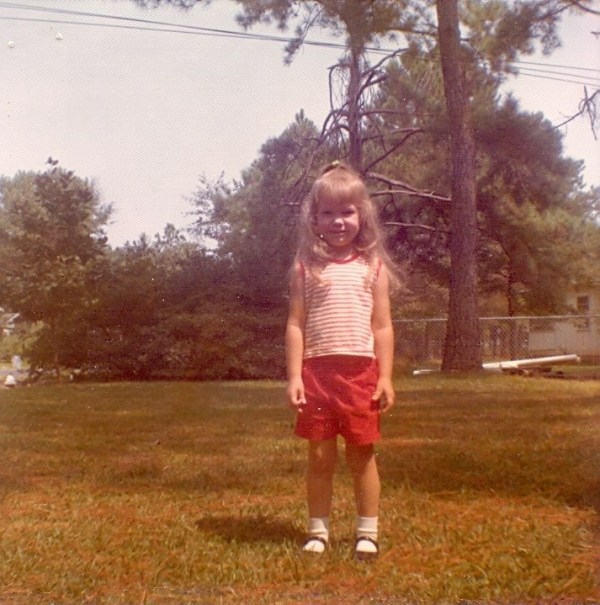
The system, obviously, was quite different when I was in foster care. I was in the system in the late 60s and early 70s. That system was secretive and was not geared for the benefit of the child. At no time did I ever feel loved, acknowledged in my feelings, or did I understand my situation. I was treated more as a commodity than a child. In those five years and four months, I was in four homes. The last home was my longest and the one that I still somewhat recall. I cannot see faces anymore, but I can recall certain situations. Some I wish I didn’t.
There were two foster children in this home. My younger foster brother, Wesley, had some issues with his legs and wore braces. I recall going with him when his braces had to be adjusted, or he had to get new shoes. I believe he was born with curved legs and that they were being straightened out. Believe me, the braces did not slow him down any and it did not keep him from doing the things he wanted to do. Then there were three natural children—a son and two daughters. I will tell you that Wesley and I did not understand that we were not their children or that he and I were not brother and sister. DFACS did a terrible job of explaining these situations to us, if they ever tried. I don’t recall ever being told that we were not actual siblings.
Our clothes and toys (although we only had 1 or 2) came from Goodwill. We never had anything new. We had never been taken out of the home to a store to go shopping for toys or food. We were always at home, except to go to the doctor or once to go on a trip. When our adoption came, the day before we were made to pack up our things. When we asked to take a book, we were told that we could not because those things did not belong to us. We both went to our new families with the clothes on our backs and nothing else. Today, foster children are fortunate enough to have suitcases to take their belongings with them and to have foster parents who don’t confiscate their belongings at the door.
We also ate differently than the rest of the family. We were always fed at different times from everyone else. I suppose that, perhaps, they had food stamps for us and only those foods were fed to us. I recall a breakfast one morning. We had oatmeal and a small cup of Kool-Aid. Mine was cherry. Wesley accidentally knocked my Kool-Aid over into my oatmeal. I was forced to eat it anyway. There were no treats except for birthdays. We did get our favorite cake, but we had no friends and there were no parties. There was no Christmas for us. No presents. No Santa Claus.I knew nothing of these until I was adopted. You wouldn’t have known any of this if you listened to DFACs, though. According to them and their “Non-identifying Information Sheet of Lies”, I had lots of toys, and I loved to go grocery shopping. If I did, why did I weigh 31 pounds as a 5-year old?
Today, I doubt foster families would get away with this. A 5-year-old would be in kindergarten and, if the child weighed 31 pounds, someone would be answering a ton of questions as to why. However, an issue that continues from my time until now is that trauma, no matter when and how experienced, separation from birth parents, inadequacies of health care often lead to behavioral, mental, and physical health issues. In the late 1960s, some states began to pay subsidies for hard-to-place children who had these types of issues. Today, parents of children adopted or fostered with ADHD, OCD, GAD, and other mental health disorders receive monthly stipends to offset the costs of treating these disorders.
It is estimated that anywhere from 30 to 80% of foster youth have at least one chronic medical condition, and roughly 25% have three or more chronic illnesses. Obviously, these children deserve foster parents who are able and willing to provide, not only the time needed to obtain the treatment these children require, but the emotional support and the true care and concern as well. Caring for a child with a terminal illness requires an even more special type of foster situation. For these children, their chronic conditions are not only more likely to be pervasive than among their peers but also more likely to cause serious health consequences. According to ChildrensRights.com, 77% of foster children experience more eating disorders than their peers. Bulimia occurs seven times more often among foster children than it does among the general population, and it tends to require intervention more often. (https://www.childrensrights.org/news-voices/for-children-in-foster-care-chronic-illness-takes-a-heavy-toll)
My experience when I was in care was that we were only taken to the doctor for our shots once a year. I only recall going to the doctor one other time and that was for a horrific headache, which I did not realize at the time was a migraine. I was not a particularly healthy child so it is surprising that I would not have needed to go to the doctor more often, but I know that I only went once a year. Wesley went to change his braces and to get new shoes and to get his shots. They had to do those things because he was growing. DFACS would know if the braces or shoes were too small, and they would get into trouble. They did as little for us as they could get away with. Interestingly, in Alabama where I lived, foster parents were paid $30 per month for standard foster care in 1973 (the year we were adopted). So that means that our foster parents made $60.00 for us. Today, they are paid $543; thus, they would make $1086 today for two children of similar age. That is a 27.6% increase which is quite small for the time period. That’s 52 years. You’d think they would’ve given a bigger increase given inflation over that length of time.
When we talk about mental health and trauma, we must talk about trauma that comes from anywhere. It could come from the home with the biological family that caused the separation and placement into the system, it could be abuse in the foster home, it could be simply the separation itself. Even a child placed at birth and who grows up in foster care like me will experience the trauma of separation. Ignoring this or belittling this fact only hurts the child more. Every adoptee experiences trauma, even those who are adopted at birth. No matter when a person realizes that their biological parent is not the parent who has raised them, it is going to create an identity crisis, and this crisis is traumatic. Working through the trauma takes time and therapy for everyone. How each goes about it will be different, but each will have to do it. Failing to seek healing through therapy or blocking the trauma can have dramatic results, if not deadly. “McCauley Evans describes three reasons for the disproportionately high percentage of adoptee suicides: 1) Adoption—or more precisely the separation from one’s mother—is a trauma. 2) Adoptees lack a complete, accurate, and up-to-date medical history, which may include depression or even suicide. 3) Adoptees don’t want to upset their adoptive parents with concerns about depression or anything that could be seen as ingratitude, including normal, healthy curiosity about their roots” (Riben, M. (2015). Toward Preventing Adoption-Related Suicide. Huffington Post).
When it comes to foster children, NIH found in a study of 515 foster children, that 26.4% of preadolescent children who had experienced abuse and who had entered foster care in the previous year had a history of attempting suicide and 4.1% were at imminent risk of attempting suicide. In this study, NIH further found that “children at higher risk of suicidality tended to be younger, non-Hispanic, abused, and to have experienced multiple types of maltreatment, more referrals to child welfare, more household transitions, and a longer length of time in foster care and that physical abuse and chronicity of maltreatment were the most robust predictors of suicidality.” https://pmc.ncbi.nlm.nih.gov/articles/PMC4319651/
Here's my point, if we wish for adoption and the foster care system to be our substitution for abortion, then we have to overhaul both. We have to stop treating children like a commodity. Children should never be sold! Foster and adoptive parents should be the most highly scrutinized people on the planet. There are too many pedophiles beating the system and they do it by circumventing the system and going outside the normal legal avenues. One way of doing this is rehoming. Adoptive parents who decide their adoption did not work out how they wanted; so, they go to the personal ads and list the child for sale. They find someone willing to take the child…just pay me for our expenses; they go to an attorney; and it’s all done outside of the normal channels with no vetting of the new parents. This process should be illegal, but it isn’t.
There also needs to be more regulation of private adoption agencies for these same reasons. We have to make sure that adoptive parents are being vetted properly and thoroughly, and the same for foster parents. We cannot allow ourselves to become so desperate that we take anyone. When we do this, our children get abused.
And then we need superior healthcare for our foster children, especially mental healthcare. We need to encourage them to seek counseling, group therapy, and mentors from former fosters and adoptees who have been successful. We need to turn this system around so that women can feel good about placing their children into the system and not worry that their children are going to be hurt or left. We need to encourage people to adopt. There is nothing wrong with our foster children. Bless their hearts they don’t deserve the reputation foster care gets. They are beautiful, God made children who deserve to be loved and cared for. God has a purpose for their lives, and He may just very well bless you and your family for bringing a foster child into your home. Remember Moses? He was the first foster child. God had a pretty amazing purpose for him, didn’t He?
In closing out this blog post, I would ask that you pray for our foster children. Pray for them to have safety in their homes, to have love that's true, to find good friends who they can depend on, and for permanent families. Pray that dangers like these below be taken away and that they be protected. Our children should not have to fear their homes.
1. Alarming Prevalence of Abuse – Children in foster care are significantly more likely to experience abuse, with up to 40% facing some form of maltreatment. 2. Common Types of Abuse – Neglect is the most frequent form (53%), followed by physical abuse (16%) and sexual abuse (4.4%), with residential facilities reporting higher abuse rates. 3. Declining Foster Care Population – The number of children in foster care has decreased by 6% in recent years due to preventive measures and family preservation efforts. 4. High Vulnerability Factors – Parental substance abuse, young age, and severe mental health challenges contribute to the heightened risks faced by foster children. (https://powertosoar.org/abuse-in-foster-care-statistics/)
Children are our hope for tomorrow. We cannot be selective. We must cherish them all; support them all; love them all. "The Lord watches over the foreigner and sustains the fatherless and the widow, but he frustrates the ways of the wicked." Psalms 146:9 NIV
I realize this post may be controversial for those who do not have the faith that I have. If that’s you, then you can take a pass on this is post, BUT let me say that I care about your soul and that I don’t wish for anyone to spend their eternal life in hell. I pray that everyone comes to know Jesus as I do, but it is a personal choice.
The Movie “Wicked”, in theaters now, is based upon the Broadway play of the same name which is based upon the characters of L. Frank Baum. There is much most of us don’t know about these books and this man that we ought to know. For most of us our knowledge stops at the 1939 movie “The Wizard of Oz” starring Judy Garland. The movie is a mixture of song, dance, charm, a bit of eerie fear, and a heartwarming ending. But the author and these books carry a much darker and more evil foundation.
L. Frank Baum and his wife Maude were members of a religious sect called Theosophy. Theosophy is a religious and philosophical system that originated in the United States in the late 19th century. It is based on the writings of Russian mystic Helena Blavatsky and draws upon the European philosophies like Neoplatonism and Asian religions like Hinduism and Buddhism. Theosophists believe in a deeper spiritual reality that can be accessed through meditation, intuition, or revelation. He believed in the theory of elementals (invisible, vapory beings) popularized in Madame Blavatsky’s Isis Unveiled (1877), and like the Rosicrucians’ belief in the combining of God and nature, and not unlike William Butler Yeats’ (Mason and Fabian) search for a new mysticism. They believed in reincarnation, karma, and did not believe in Satan.
Further, the Baums believed that mans time on earth was but one step on the path towards enlightenment which passed through many states of consciousness and many universes. Baum believed in essentially a religion of nature. He believed each element: water, earth, fire, air could be broken down further—Air, sylphs; Water, nymphs or undines; Earth, gnomes; Fire, salamanders, for example. Then each of these could be broken down into smaller categories based upon the four states of matter: gas, liquid, solid, and energy. In his writings, science and magic are one and the same.
Women played a critical role in the belief systems of the Baums. Mrs. Baum and her mother, a radical feminist named Matilda Gage, often had seances and clairvoyants in their home. Mrs. Gage was so radical that she believed the suffragettes of her day were too conservative and she created her own suffrage organization, The Women’s National Liberal Union. Mrs. Gage was also interested in palm reading and astrology.
The Land of Oz was composed of 4 triangular pyramid shaped countries pointing inward like a Mason rose croix or a Rosicrucian cross. The “Emerald” color may have been chosen because it was Baum’s birth stone or because it is considered by some to be a stone of prophecy, which leads to another interpretation of the story. This interpretation suggests that the journey to the Emerald city is simply a journey to the center of ourselves because the Emerald City was the center of Oz. It was here that Dorothy, the Tin Man, the Scarecrow, and the Cowardly Lion would find the answers they were looking for. When the Wizard gives his trinkets to the travelers, he tells them that they had the answers all along, they just had to “look inside themselves”.
Unlike the newest adaptation of the story, Wicked, which revolves around the witches—The Wicked Witches of the East (the Black Witch) and West and the Good (White) Witch of the North and South known as Glinda, the original book is quite different. The MGM movie also took some liberties with the story. For example, there was no Professor Marvel in the book. As we know from the original story, Dorothy kills the Wicked Witch of the East when her house lands on her upon her arrival in Oz. The Black Witch represents the darkness of humanity which exists in all of us. Dorothy is then challenged by the Wicked Witch of the West who wants to retaliate and avenge her sister’s death. Glinda helps Dorothy to navigate around her sister along the yellow brick road to arrive safely in Emerald City to see the Wizard so that she can ask the Wizard to go home. But the Wizard requires that she first kill the Wicked Witch of the West and bring him her broom. Dorothy does as he ask by showing courage and standing up to the Wicked Witch and throwing water on her.
The story behind Wicked, however, attempts to portray a different perspective to these witches and was not written by Baum. This adaptation was based upon Gregory Macguire’s novels and it is complete rewriting of the story of the witches in an attempt to make them more relatable and likable, as if we need to like and relate to witches. The main character is the Wicked Witch of the West, now known as Elphaba. The story aims to explain the contentious relationship between Elphaba and the Wizard. The Good Witch of the North and South starts out in this story as “Galinda”, and the two are neither sisters nor friends.
Elphaba has a chip on her shoulder because of being green and being treated differently because of her green skin. Galinda, on the other hand, is considered beautiful and the popular girl in the college of magic. The revelation comes when the Wizard is discovered to be an evil man out for himself to the detriment of the green people. He manipulates the Ozian people to discriminate against the green people leading them to become called “wicked”. This all sounds like a treatise on systemic racism in America set to music, doesn’t it?
Like with most movie adaptations much from the books have been left out, and it should. The books written by Macguire are not for children, if they’re really for anyone. USA Today’s review of the books had this to say,
“The “Wicked” book by Gregory Maguire has key adult differences from the stage adaptation. One of the opening scenes is puppets having sex. When we first meet Elphaba in the book, she’s a feral infant who is muzzled after biting off people’s appendages. The book contains drinking, drugs, sexual assault, prostitution, crime and wild sex parties between humans and animals.”
There are so many problems with the Oz stories and the Baums, but what made me walk away from the stories and movie was when I discovered its connection to the CIA’s Project MK-Ultra. MK-Ultra is the CIA’s program to create various methods of mind control. One of these methods was using trauma. Trauma based mind control, also known as Monarch Programming, uses horrific mental, physical, sexual, and emotional abuse to cause mental disassociation which then would create a mind controlled slave. It creates an amnesia barrier between the person’s ordinary identity and the new identity or other personality. While the CIA claims that the program ceased, there are those who believe it continues covertly under a new name.
Almost all documentation relating to MK Ultra mentions the importance of the movie Wizard of Oz in the creation of mind control objectives. One of the ways they supposedly used the Wizard of Oz to control people was to dress was the victim according to the programming use on them. To trigger a victim, they could put red shoes on someone. This would cause the victim to enter a dissociative state. Dissociation is known as “going over the rainbow”.
In the process of traumatizing the victim, drugs like LSD, cocaine, and opium were also used to aid in the dissociative process. Some people consented to the drug testing through programs at universities and in hospitals in the United States and Canada. Others were tested on without their knowledge or consent, like prisoners. Some like Cathy O’Brien have openly spoken about their expenses in this program. I recommend this YouTube video with Cathy. https://youtu.be/-ouRmUm7cM8?si=Nr9yZTIC3Bd2Y1h7 There were 144 subprojects under the MK-Ultra Project at the CIA. It would be difficult to almost impossible to know if all had been disbanded or if some continue to this day.
Knowing that stories like the Wizard of Oz and Wicked incorporate demonic and occult themes, that they have been used to torture people and children is enough for me to stay away. My father always told me that “you get out what you put in.” If you open yourself up to evil, you’re likely to get evil out at some point. That isn’t a risk that I am willing to take for myself and certainly not for my children. I hope you will stay away as well.



 Author. Political Analyst. Family Historian
You must be logged in to post a comment.