
I spent some time thinking about what my next series would be about. I wanted a series that would be interesting, educational, and, perhaps, thought provoking. When I taught political science at our local university, I taught on this very subject. I had my students pick countries that they would research immigration law and write a paper and do a presentation on each country. It was always a thought provoking class because we don’t normally talk about the immigration policies of other nations in comparison to our own. Most don’t truly understand what our policy is. We’ve heard about various VISA types but we don’t understand them. We’ve heard of GREEN CARDS but don’t understand the requirements for obtaining and keeping one. Most of us don’t know what is required to become a US Citizen.
My plan is to start with the history of immigration in the United States and then move on to other issues like those mentioned above and discuss thoroughly the issues of immigration. I think readers will find this truly interesting. That, of course, is my goal.
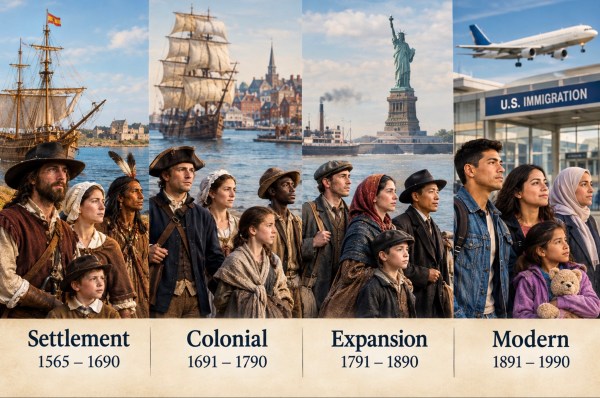
First, I will cover the history of immigration utilizing 4 time periods: Settlement (1565-1690); Colonial (1691-1790); Expansion (1791-1890); Modern (1891-1991). These time periods cover the changing dynamic of immigration from the very earliest human arrival in the “New World”. Keep in mind, I know people were already here. I am part Muskogee Creek, so I am well aware that this world was not new and that those already living here lost any control they had over their land when people began to arrive. For them, we are all illegal. But even they weren’t here always. They came across the Bering Strait from Siberia and other parts of Asia, though that was thousands of years ago, but they were new comers at one time. Immigration has always been a part of human life. The question is with a population of the US being 342.9 million people when do we have enough? Is there a time when we should cut off all immigration into our country? We are already dealing with homelessness, hunger, and other issues of over population and poverty. When do stop taking people in and start encouraging other nations to keep their people and change their systems so that they don’t want to leave?
Immigration in the United States: Four Eras That Tell a Very Different Story

When Americans talk about immigration, it is easy to imagine that the United States has always had something resembling today’s immigration system—visas, legal categories, border inspections, deportation, and a distinction between legal and illegal entry. It hasn’t. For most of American history, there was little or no federal immigration policy at all. The meaning of “immigrant,” who was welcome, who was excluded, and what constituted illegal entry changed dramatically over four centuries.
A useful way to see that evolution is to divide American immigration history into four periods:
- Settlement: 1565–1690
- Colonial: 1691–1790
- Expansion: 1791–1890
- Modern: 1891–1990
These periods also reveal an important point: the people coming to America were not all the same type of immigrant. Some were wealthy merchants and entrepreneurs. Others were farmers, artisans, religious refugees, indentured servants, enslaved people, or desperately poor laborers. And the government did not treat all of them alike.
I. Settlement: 1565–1690 Before There Was a United States Immigration Policy
The first period is perhaps the most difficult to call “immigration” in the modern sense. There was no United States government, no federal border, no American citizenship and no national immigration law. Instead, European powers were establishing colonies on land already inhabited by Indigenous peoples.
The newcomers came primarily from:
- Spain
- England
- France
- the Netherlands
- smaller numbers from other European countries
They came for very different reasons. Some were:
- soldiers and administrators
- explorers
- missionaries
- farmers
- tradesmen and craftsmen
- merchants
- investors
- religious settlers
- indentured servants
And some arrived as enslaved Africans, whose movement to the Americas was forced rather than voluntary immigration.
The Spanish established St. Augustine in Florida in 1565. English settlement followed at places such as Jamestown and Plymouth. Dutch colonists established New Netherland, while French settlements developed along the St. Lawrence and eventually throughout the Mississippi Valley.
There was no immigration policy, not in the modern sense. The controlling authority was generally the European crown or colonial proprietor, rather than an American federal government. England, Spain, France and the Netherlands determined who could establish settlements in their respective colonies. Colonial governments could also impose their own requirements.
In other words, the question wasn’t generally: “Does this person have a legal right to immigrate to the United States?” There was no United States to immigrate to. The question was more likely: “Does this person have permission from the colonial authority to settle here?”
There was considerable economic diversity. Some settlers had substantial resources and were investors or merchants. Others came with almost nothing.
One particularly important group was indentured servants. A person could agree to work for a specified period—often several years—in exchange for transportation to America, food and shelter, and eventually freedom and, in some cases, land or wages. Thus, the early colonies weren’t populated exclusively by wealthy Europeans seeking opportunity. A significant portion of the European population consisted of people seeking a new life because economic opportunities were poor at home.
What about “illegal immigration”?
This is where modern terminology becomes misleading. There was no federal concept of “illegal immigration.” A person could certainly violate colonial rules by entering or settling without permission, but there wasn’t a nationwide immigration enforcement system comparable to the modern one. Enforcement was primarily local and colonial. A person who violated colonial law might be:
- denied permission to settle,
- expelled,
- arrested under another law,
- returned to a ship,
- or simply remain undetected.
There was no U.S. Border Patrol, federal immigration court or federal deportation system.
II. Colonial America: 1691–1790 Immigration Becomes a Major Part of Colonial Society
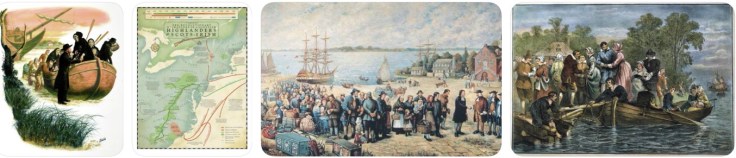
By the eighteenth century, immigration had become an essential component of population growth. The colonies increasingly attracted people from throughout Europe. Among the important immigrant populations were:
- English
- Scots
- Scots-Irish
- Germans
- Dutch
- French Huguenots
- Swiss
- Welsh
- smaller groups from other European countries
Pennsylvania provides an interesting example. Pennsylvania actively attracted immigrants. William Penn envisioned Pennsylvania as a place where people of different European backgrounds could settle. Germans, Scots-Irish, Quakers, Mennonites and other religious groups arrived in substantial numbers. Philadelphia became one of the most cosmopolitan cities in colonial North America.
Who were these immigrants? Again, there was no single “immigrant type.” There were Farmers and agricultural families; Germans and Scots-Irish came looking for land; Craftsmen; Carpenters, blacksmiths, weavers, shoemakers and other skilled workers were valuable to developing communities; Merchants and entrepreneurs. Port cities attracted people with capital and commercial connections. There were also religious refugees because of persecution or restrictions throughout Europe.
Indentured servants continued to come under contract to wealthy to pay for their transportation. Most of these people were poor Europeans. The slave trade continued. Of the 12.5 million Africans sold to slave traders about 10.7 million survived the passage. Of those approximately 400,000 were brought to the US.
These categories matter because it is inaccurate to describe colonial immigration simply as either “rich people” or “poor people.” Both were present.
Did the colonies restrict immigration? Yes—but restrictions were generally colonial rather than federal. Colonies could impose rules concerning:
- settlement
- religion
- political loyalty
- poverty
- public assistance
- indentured servants
- enslaved people
- disease and quarantine
One important issue was whether a colony would have to support poor immigrants who arrived without sufficient resources. That concern would remain part of American immigration policy for centuries.
What constituted illegal immigration at this time? There still wasn’t a comprehensive national concept of illegal immigration. A person could violate colonial law or arrive without the permission required by a particular colony, but the enforcement mechanisms were fundamentally different from today’s. There was no national immigration database and no federal border enforcement system. Colonial governments relied on:
- local officials
- sheriffs
- courts
- port authorities
- poor laws
- ship regulations
III. Expansion: 1791–1890 The Era of Open Immigration—and the Beginning of Federal Restrictions
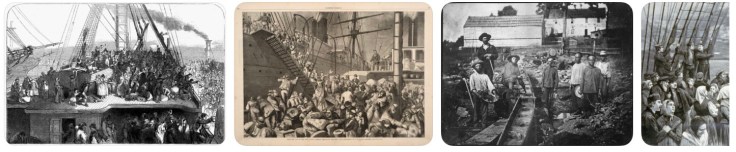
This period produced one of the biggest transformations in American immigration history. The United States went from having very little federal immigration regulation to developing the beginnings of a national immigration system.
It also experienced enormous immigration. Between 1820 and 1890, millions of immigrants arrived, with federal records beginning systematic reporting of immigrant arrivals in 1820. In the early republic, immigration was essentially open. The Constitution gave the federal government authority over naturalization, but that wasn’t the same thing as establishing a comprehensive immigration system. The Naturalization Act of 1790 established the first federal naturalization rules and restricted naturalization to “free white persons” of good moral character who had lived in the United States for a specified period. That distinction is important: Naturalization law was not the same thing as immigration law. A person could enter the country without facing the modern visa system and still be unable—or initially ineligible—to become a citizen.
The Alien and Sedition Acts
In 1798, the federal government temporarily became much more restrictive. The Alien Act authorized the president to remove an alien considered dangerous to the United States, while the Naturalization Act increased the residency requirement for citizenship from five to fourteen years. These measures were controversial and the Alien Act was not renewed. For much of the nineteenth century, therefore, the United States had an enormous amount of immigration without a comprehensive federal system controlling who could enter.
Immigrants who came during this time period were varied and where they came from changed during the course of the century. We will consider them during specific time periods.
Early and middle nineteenth century
Large numbers came from:
- Ireland
- Germany
- Britain
- Scandinavia
- other parts of northern and western Europe
The Irish famine of the 1840s produced a particularly dramatic migration. Many immigrants were poor, but again, “poor” didn’t mean “unskilled.” Immigrants included:
- farmers
- laborers
- craftsmen
- engineers
- merchants
- professionals
- entrepreneurs
- domestic workers
- skilled industrial workers
America’s expanding cities, canals, railroads, mines, factories and farms created enormous demand for labor.
The Chinese migration
Chinese immigration became particularly important in the West. Chinese immigrants worked in:
- mining
- agriculture
- restaurants and laundries
- small businesses
- railroad construction
The Library of Congress notes that Chinese laborers played important roles in mining and construction of the Central Pacific Railroad.
The late nineteenth century
By the 1870s–1890s, immigration increasingly included people from southern and eastern Europe. Between 1870 and 1900, nearly 12 million immigrants arrived, driven by economic hardship, famine, land shortages, political persecution and the attraction of American economic opportunity.
“Illegal immigration” in the sense we know of it really became a national issue in the late nineteenth century. This is one of the most important distinctions in American immigration history. Before federal restrictions existed, entering without a federal immigration visa wasn’t “illegal immigration” because there was no such federal requirement. The concept changed as Congress began creating categories of people who were prohibited from entering.
1875: the beginning of federal exclusions
The Page Act of 1875 was the first federal immigration law to exclude particular categories of people. It targeted, among others, Chinese laborers arriving under certain circumstances and Chinese women suspected of prostitution.
1882: More Significant Change
The Immigration Act of 1882 excluded categories including:
- certain convicts
- people considered likely to become public charges
- people with certain mental or physical conditions
And the Chinese Exclusion Act of 1882 suspended immigration of Chinese laborers. The Library of Congress describes Chinese exclusion as the first federal legislation specifically excluding a racial/ethnic immigrant group on such a broad basis.
1885: contract labor
Congress also prohibited the immigration of many contract laborers. Thus, by the end of the Expansion period, America was moving away from the nineteenth-century model of: “Come to America and find work” toward: “Certain categories may enter; others may not.” That distinction created something recognizable as illegal entry.
Initially, enforcement was relatively primitive. There was no modern Border Patrol. Federal officials increasingly inspected immigrants at ports, and people found inadmissible could be denied entry or returned. But enforcement away from ports was extremely limited. A Congressional historical account notes that until the late nineteenth century there was little federal legislation restricting immigration; by the early twentieth century, border enforcement consisted of only a very small number of mounted inspectors. Consequently, someone who successfully entered the country and disappeared into the population could be extremely difficult for the government to locate. This would become a major issue in the next period.
IV. Modern Immigration: 1891–1990 From Open Immigration to a Complex Federal System
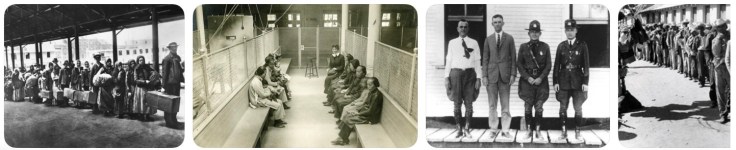
The year 1891 is an excellent dividing line because immigration administration became substantially more centralized at the federal level. The United States now had a national immigration bureaucracy. This period eventually produced:
- immigration inspection
- exclusion categories
- deportation
- quotas
- visas
- border enforcement
- immigration detention
- refugee programs
- employment restrictions
- legalization programs
In other words, the basic architecture of modern immigration policy emerged during this period.
1891–1920: Mass immigration meets increasing restriction
The great wave of immigration continued. Millions arrived from:
- Italy
- Russia
- Poland
- Austria-Hungary
- Greece
- the Balkans
- Germany
- Ireland
- Britain
Between 1880 and 1920, approximately 4 million Italians came to the United States alone. Many were poor agricultural workers or laborers. But they also included:
- craftsmen
- shopkeepers
- businessmen
- professionals
- political refugees
- religious minorities
- entrepreneurs
When we think of immigration during this time period, most will think of Ellis Island which became the famous symbol of this era. Immigration wasn’t simply “welcomed”. This period saw increasingly extensive federal screening. Immigrants could be rejected for reasons including:
- disease
- criminal history
- certain political beliefs
- prostitution
- likelihood of becoming a public charge
- other statutory grounds
The government was increasingly asking: “Who should be allowed to become part of American society?”
1921–1965: The quota era
After World War I, American immigration policy changed dramatically. The Emergency Quota Act of 1921 established numerical restrictions, followed by the Immigration Act of 1924, which created the national-origins quota system. The system strongly favored immigration from northern and western Europe and sharply reduced immigration from other regions. Asian immigration was also severely restricted. This was a profound departure from nineteenth-century immigration.
Instead of merely asking: “Is this person admissible?” the government increasingly asked: “How many people from this particular country or national origin should be admitted?”
But there was an important exception. Mexico Mexican immigration followed a different trajectory. American agriculture and industry repeatedly needed Mexican workers. During World War II, the United States created the Bracero Program, allowing Mexican workers to enter temporarily under employment contracts. The program ultimately brought nearly 4.5 million Mexican workers into the United States over its duration.
There was also contradiction. American employers wanted the labor. Immigration restrictions limited the supply of legal workers. The result was an increase in unauthorized Mexican migration. The Library of Congress describes growers actively seeking undocumented workers when legal immigrant labor was insufficient.
Finally, illegal immigration becomes a major enforcement issue. This is where the modern meaning of illegal immigration becomes much more recognizable. The government now had:
- immigration inspectors
- immigration records
- deportation authority
- border patrols
- exclusion laws
- numerical quotas
And therefore it could identify people who had entered or remained in violation of federal immigration law.
Operation Wetback
In 1954, the federal government launched Operation Wetback, a major enforcement campaign aimed primarily at unauthorized Mexican immigrants. The Library of Congress reports that approximately one million people were deported or returned during the operation, although historical estimates and the circumstances of many of those returns have been debated. This illustrates another major development: Illegal immigration was no longer primarily a question of being turned away at the port. It increasingly involved locating people after they had entered and settled in the United States.
1965: Another Immigration Revolution
The Immigration and Nationality Act of 1965 fundamentally changed the system. It abolished the national-origins quota system and replaced it with a preference structure emphasizing:
- family reunification
- skilled workers
- other employment and humanitarian categories
The change had major demographic consequences. The Library of Congress notes that immigration after 1965 increasingly came from Asia, the Mediterranean, Eastern Europe, Latin America and Africa.
US Citizenship & Immigration Services likewise notes that the 1965 amendments replaced the national-origins system with a preference system emphasizing family reunification and skilled immigrants. This is one of the most important transitions in the entire history of American immigration.
1980–1990: Refugees, legalization and enforcement
The final decade of our period produced another important combination: more humanitarian admissions + stronger enforcement + legalization. The Refugee Act of 1980 established a general framework for refugee admissions and the Immigration Reform and Control Act of 1986, commonly called IRCA, attempted to address unauthorized immigration from several directions simultaneously. The IRCA:
- legalized many undocumented immigrants who had been living in the country since before 1982
- created a legalization program for certain agricultural workers
- imposed sanctions on employers who knowingly hired unauthorized workers
- increased immigration enforcement
This is significant because Congress was acknowledging a recurring problem: Unauthorized immigration had become deeply embedded in the American labor market and communities. In response, the government combined enforcement with legalization.
The Immigration Act of 1990 further increased overall immigration levels, revised exclusion and deportation rules, created new nonimmigrant categories and established Temporary Protected Status. The Act moved away from simply increasing the number of VISAs and created a system of who would be allowed to obtain one. There were three major categories:
- Family sponsored immigrants
- Employment based immigrants
- Diversity immigrants
Employment based immigration was expanded significantly. The ACT created a much more elaborate system of admitting people based upon their occupations. Eight different types of immigrants were created:
- People with extraordinary skills and abilities
- Outstanding professors and researchers
- Multinational executives and managers
- Professionals with advanced degrees
- Skilled workers
- Professionals
- Certain religious workers
- Immigrant investors
As you can see, the ACT explicitly recognized workers with skills, education, professional expertise, and those who could invest in our country. The EB-5 program was established an immigrant investors program. This was created for those who bring foreign investment and/or create jobs. The goal was to not simply bring in workers, but to create pathways for highly skilled workers, professionals, and investors.
The Diversity Immigrant Visa program was also created in the 1990s. It is often referred to as the Diversity Visa Lottery. The purpose was to provide opportunities to people from countries that historically had low levels of immigration to the United States. The difference was that this program did not require a family or employer to sponsor them. Instead they would be selected by a lottery.
However, the family sponsorship system was also expanded. Specifically, Congress increased Visa availability for spouses and minor children of lawful, permanent residents. This continued the basic principle established by the Immigration & Nationality Act of 1965.
Additionally, the ACT created a Temporary Protected Status which allows nationals of designated countries experiencing certain conditions like armed conflict or environmental disaster to remain temporarily in the United States rather than being returned to a country where conditions were unsafe. This was a major expansion of the humanitarian side of immigration law.
Exclusion and deportation were also revised by the ACT. Congress updated the grounds for excluding people from entry and for deporting people already in the country. The requirements for becoming a citizen were changed also. The naturalization decision-making was transferred to the Immigration & Naturalization Service. It established an administrative naturalization process and ended judicial naturalization.
Finally, the ACT addressed illegal immigration. These changes were important in light of what the IRCA of 1986 had done. The 1986 law specifically attacked unauthorized immigration by employer sanctions, increased enforcement, and legalization (amnesty). The ACT of 1990 did not repeat the legalization program. Instead, it restructured legal immigration while revising the exclusion and deportation provisions.
CONCLUSION
By 1990, the US had gone from essentially no national immigration system to a highly structured system in which the federal government distinguished among immigrants based upon family relationships, education, occupation, extraordinary ability, investment, nationality, humanitarian circumstances (including refugee and asylum protections), and others.
Today, our system is one of the most complex immigration systems in the world. Legal permanent immigration is still largely based on family relationships and employment, with the Diversity Visa program providing a smaller additional pathway. Additionally, the federal government maintains extensive systems for border control, visa screening, detention, removal and enforcement against illegal immigrants. The system we have today is a highly regulated federal process in which the government determines not only who may enter, but why they may enter, how long they may stay, whether they may work, and what circumstances may eventually allow them to become a permanent resident or citizen.
We must remember that these rules and regulations are LAW codified within the Federal Code. Doing anything that is adverse to those LAWS is, by definition, ILLEGAL. Breaking the law of the United States by coming across our border without a VISA or other lawful immigration status makes that person an illegal immigrant and a criminal. That is why when these people are caught and detained they must appear before a judge who determines what will happen. Law abiding citizens who believe in the enforceability of our immigration laws should not be vilified. Sanctuary cities and those who do not support our immigration laws should be. We as a nation should consider immigration as a privilege, not a right. We absolutely cannot take everyone. We cannot take into our country the 7.65 billion people living in the rest of the world, not that all of those want to come, but if a third wanted to come that is still 2.6 billion people…BILLION, not million. We have to use common sense when setting the numbers allowed to come and who we will allow to come. That is not unreasonable. Instead, perhaps, we ought to work with those citizens in those nations were problems exist to change them so that those people don’t want to leave rather than bringing them here.
Tell me what you think.
May God continue to bless our nation. We need it.


You must be logged in to post a comment.